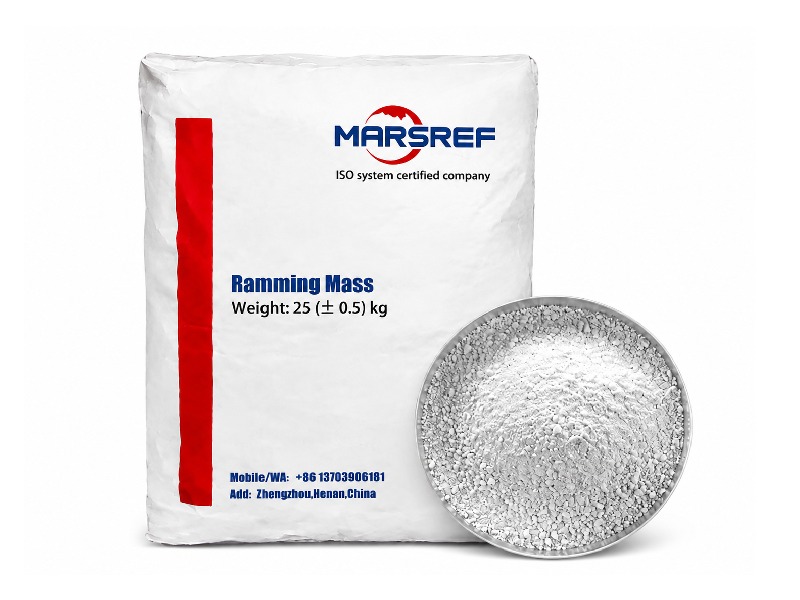
MARSREF® 8612A is a neutral ramming mix engineered around in-situ spinel bonding , made from high-purity raw materials rather than blended scrap-grade inputs. In plain terms: as the lining is heated during commissioning, the material forms magnesium-aluminate spinel directly inside the structure. That's what gives it a dense, uniform monolithic lining instead of a patchwork of weak spots.
Here's the technical snapshot foundry engineers usually want first:
| Property | Value |
|---|---|
| Al2O3 content | 85.5% |
| MgO content | 13.0% |
| Particle size | <5mm |
| Ramming density | 3.00 g/cm³ |
| Optimal service temperature | 1600–1750°C |
That 1600–1750°C working range isn't a marketing number — it reflects real induction furnace operating conditions, which is why this mix is specified for medium and large coreless induction furnaces across carbon steel, alloy steel, gray cast iron, ductile iron, and high-chromium white cast iron melting.
If you've ever stood next to a coreless induction furnace mid-melt, you know the lining isn't just a formality — it's the difference between a smooth production run and an unplanned shutdown. Anyone who's dealt with premature furnace lining failure knows the frustration: a good heat, a bad crack, and suddenly the whole schedule is off. That's usually where the conversation about ramming mix quality starts — and increasingly, that conversation leads to Marsref.
Neutral ramming mix has quietly become one of the most searched-for refractory materials in the foundry world, and for good reason. Unlike acidic (silica-based) or basic (magnesia-based) mixes, MarsRef's neutral formulation is built around an alumina-magnesia (Al2O3-MgO) system that sits in the sweet spot for versatility. It resists both acidic and basic slag attack, which makes it a practical choice for foundries melting more than one type of metal on the same furnace.
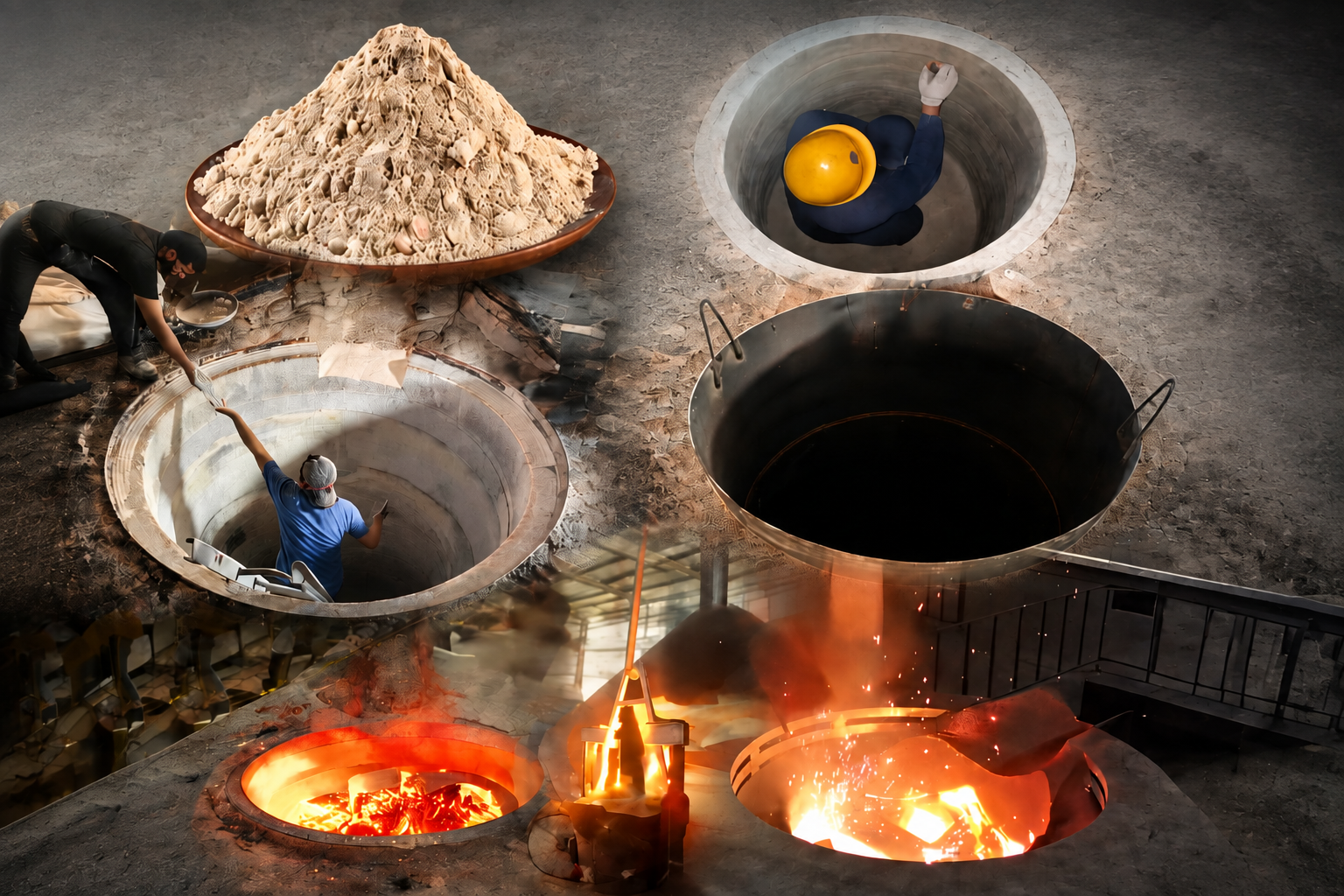
This is the part that trips people up if they're new to refractory selection. A good neutral ramming mix has to do two contradictory things at once: form a hard, high-strength glaze near the hot face early on, while staying slightly loose further back in the lining as temperatures climb. That loose backing zone is what absorbs thermal expansion and stops the whole lining from cracking under thermal cycling — one of the leading causes of furnace lining failure in coreless induction furnaces.
Marsref's particle size distribution is engineered specifically for this behavior. It's a core part of why the product holds up across repeated heat cycles instead of degrading after a handful of melts — giving foundries a lining they can actually plan a production schedule around.
No refractory ramming mass however well formulated, performs well if it's installed carelessly. Proper furnace lining construction depends on correct ramming technique, a controlled drying schedule, and a proper sintering curve before the furnace goes into full production. Skipping or rushing any of these steps is one of the most common, and most avoidable, reasons a new lining underperforms its rated service life. MarsRef's technical guidance is built around getting these steps right the first time.

A safety note worth repeating: refractory dust is not something to work around casually. Dust masks should be worn during installation, removal, and disposal to avoid inhaling fine particulate — a basic step, but one that gets skipped more often than it should on busy shop floors.
A neutral ramming mix isn't just a compromise between acidic and basic chemistry — done right, it's a genuine advantage for multi-metal foundries. MarsRef combines that alumina-magnesia versatility with a particle size distribution tuned for real-world thermal cycling, so the lining does its job heat after heat. Paired with correct installation practice, it's how foundries turn "unplanned shutdown" back into "smooth production run."
High alumina self flowing castable
Low cement castable
Anti scaling refractory castable
Corundum silicon carbide wear resistant castable